
Structural Remodeling & Open Floor Plans
Connecting Kitchens and Family Rooms the Right Way
Structural remodeling is one of the most impactful ways to transform how a home lives. In fact, nearly half of our projects involve creating open floor plans—most often by removing structural walls between the kitchen and family room to connect these two key spaces.
With nearly 40 years of hands-on remodeling experience, we understand not only how to open up a home—but how to do it safely, correctly, and in a way that enhances long-term value.
Why So Many Homes Need Structural Remodeling
Many homes built between the 1950s and 1990s were designed very differently than homes today. Kitchens were typically tucked away, separated from living areas by walls—sometimes load-bearing, sometimes not.
The reasoning made sense at the time. Cooking was messy, noisy, and often meant to stay out of sight.
I still remember growing up and attending family gatherings where everyone naturally gravitated toward the kitchen. My mother and grandmother were trying to cook, while the rest of us crowded the space—driving them a little crazy in the process.
Today, the way we live has changed.
The kitchen has become the heart of the home. It’s where people gather, talk, help, and connect. When the kitchen is open to the family room, everyone can be together—without getting in the cook’s way.
Structural remodeling makes that possible.
Removing Structural Walls: More Than Just Demolition
Opening a wall is not simply a matter of tearing drywall down. Structural remodeling requires a deep understanding of how homes are built, how loads are transferred, and how changes affect the entire structure.
Our background allows us to evaluate:
Whether a wall is load-bearing
How roof, floor, and second-story loads are supported
Proper beam sizing and placement
Post locations and foundation requirements
Seismic considerations and local code compliance
This level of knowledge is critical—especially in older homes where framing methods vary significantly by era.
Open Floor Plans That Feel Natural (Not Forced)
A well-executed structural remodel should feel intentional, not improvised.
When done correctly, opening the kitchen to the family room:
Improves sightlines and natural light
Enhances everyday functionality
Makes entertaining easier and more enjoyable
Creates a stronger connection between spaces
Increases perceived square footage without adding on
We focus on creating balanced openings, proper ceiling transitions, and layouts that respect the original architecture of the home while modernizing how it functions.
Experience Matters in Established East Bay Homes
Homes in communities like Danville, Alamo, Pleasanton, and Lafayette often come with unique structural challenges:
Older framing methods
Low ceiling heights
Complex roof lines
Partial remodels done decades ago
Seismic and permitting requirements
Our long history working in these neighborhoods means we know what to look for—and how to avoid costly surprises.
Structural Remodeling as Part of a Bigger Plan
Structural changes are most successful when they are part of a well-thought-out remodeling plan, not a one-off decision.
That’s why we approach structural remodeling as an integrated process:
Evaluate layout goals first
Confirm feasibility and costs early
Coordinate engineering and permitting
Sequence construction properly to minimize disruption
Whether the project is a kitchen remodel, whole house renovation, or major layout reconfiguration, structural work sets the foundation for everything that follows.
Real Homes. Real Transformations.
We’ve completed numerous projects where removing a single wall completely changed how a home feels and functions—connecting families, improving flow, and turning once-isolated kitchens into true gathering spaces.
(This is where your project photos, before/after images, or short local project summaries work extremely well for SEO and conversion.)
Considering a Structural Remodel?
If you’re thinking about opening up your kitchen, removing a wall, or reworking the layout of your home, experience matters. Structural remodeling requires more than good intentions—it requires knowledge, planning, and proven execution.
Done right, it doesn’t just change your floor plan.
It changes how your home is lived in—every single day.
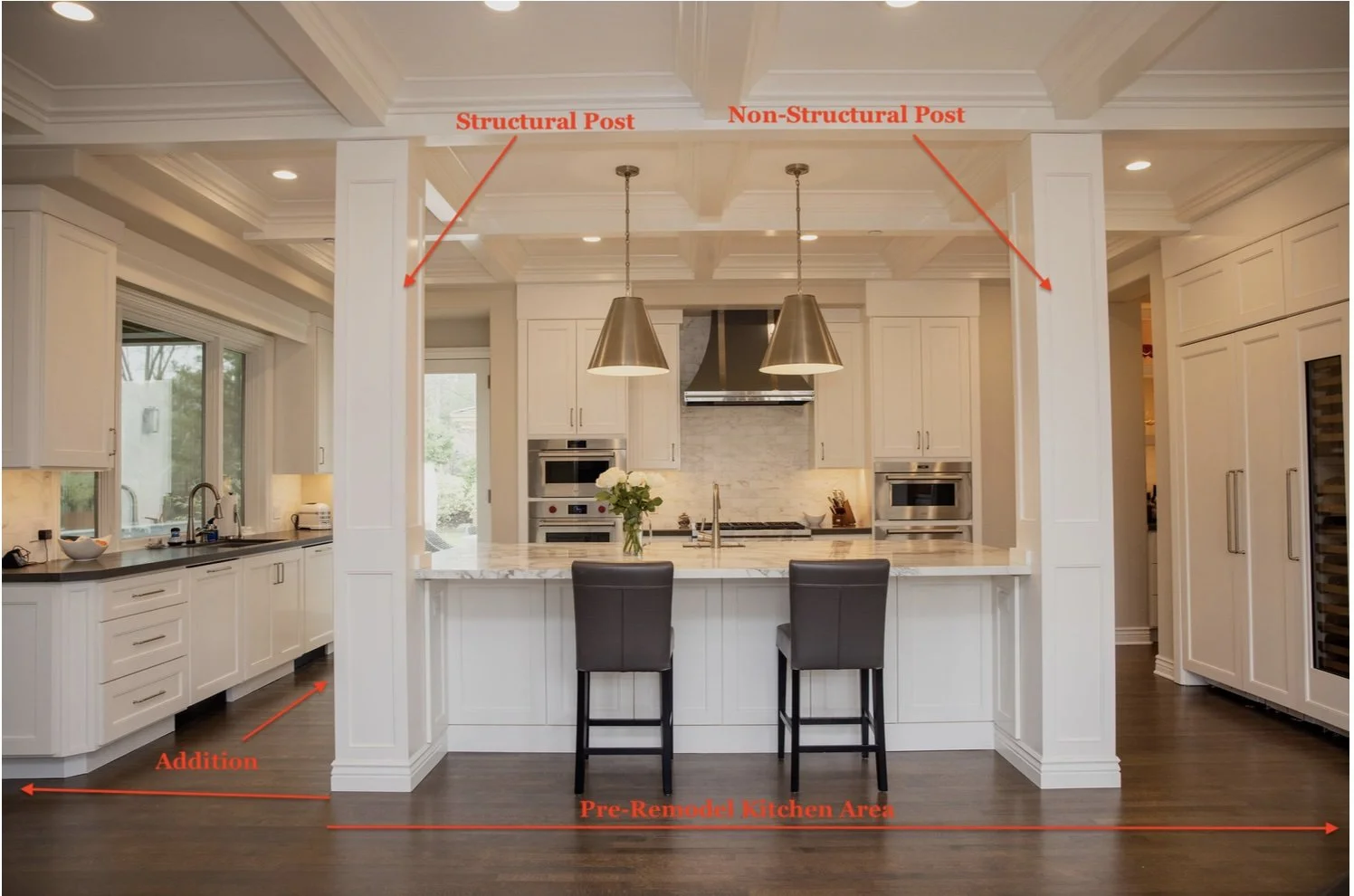
Case Study: Pleasanton, CA Structural Kitchen Addition & Remodel
How Smart Design Saved Over $40,000 in Structural Costs
One of the biggest advantages of working with an experienced design/build remodeling firm is the ability to make informed structural decisions before construction begins. This kitchen addition and remodel is a perfect example of how understanding how buildings are put together can save homeowners a significant amount of money—without compromising function, safety, or aesthetics.
The Goal
The homeowners wanted a larger, open kitchen with a central island that connected seamlessly to the surrounding living space. The remodel included a kitchen expansion and reconfiguration within a two-story home, which immediately raised an important structural question:
How do we properly support the second floor above the new open kitchen layout?
The Structural Challenge
During planning, it became clear that part of the second floor framing above the kitchen required vertical support. One common solution would have been to remove all posts and install large engineered beams capable of spanning the entire opening.
That option was feasible—but expensive.
Engineered beams, additional framing modifications, labor, and inspections would have added over $40,000 to the project cost. Even worse, it would have been money spent on structure that the homeowners would never see once the drywall and finishes were complete.